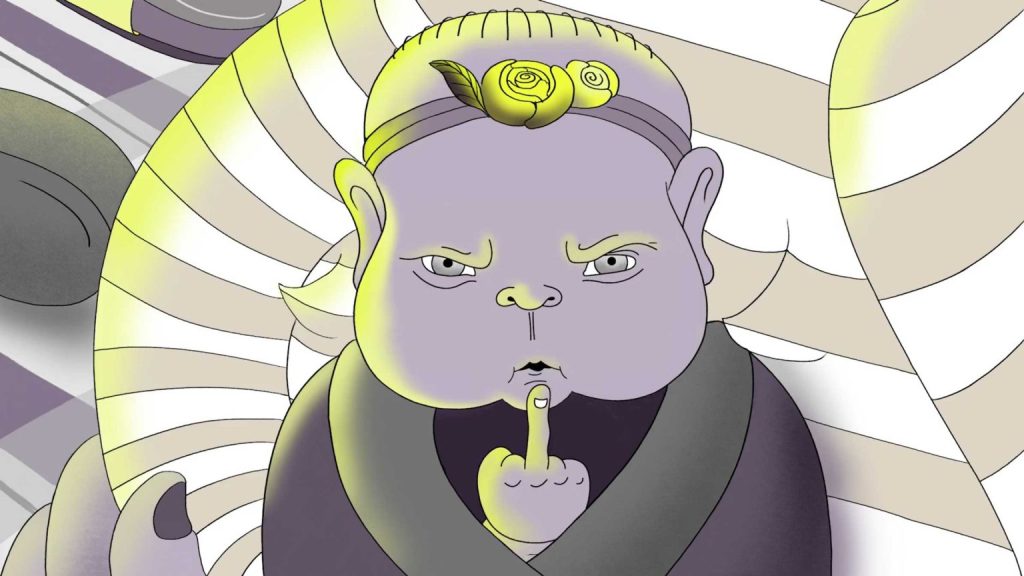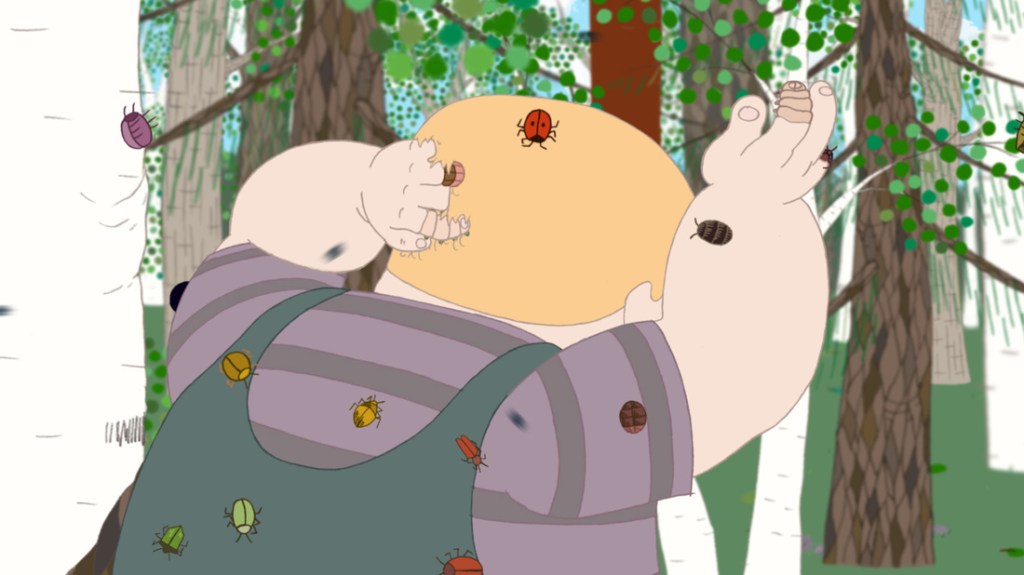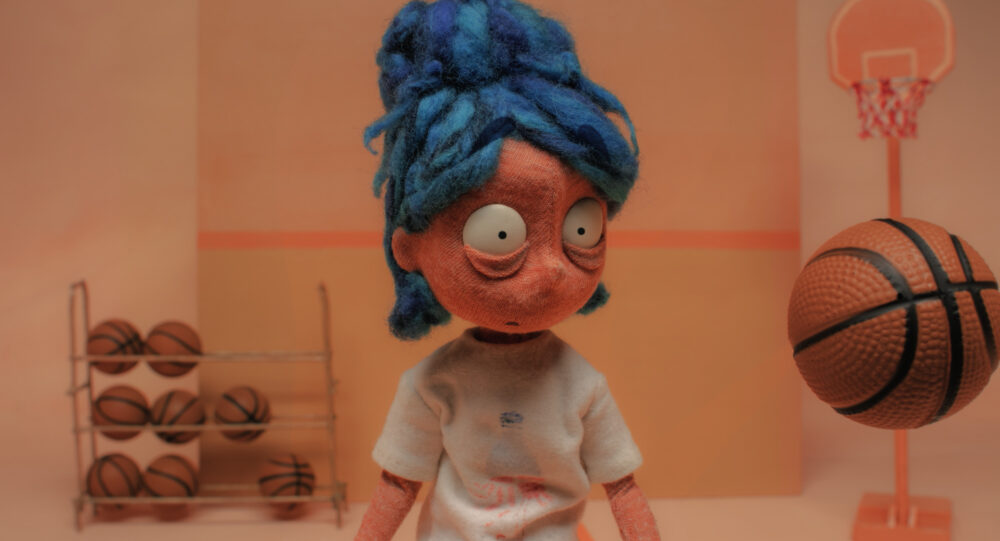
In her short film Night of the Living Dread (2021), Ida Melum brings to life a feeling I know all too well: random memories coming back to haunt you without warning. Watching it for the first time, I was utterly charmed by the film’s tone and design (the blue hair!) and sort of relieved: someone had managed to take what was in my head and turn it into a delightful comedy (with hints of horror). It felt good to know that I wasn’t the only one being chased by a mini version of myself, still cringing over a trivial incident that happened decades ago.
The graduation film from NFTS received well-deserved praise and was even nominated for a BAFTA.
Melum’s follow-up short film, Ovary-Acting (released in 2025), has also enjoyed great success lately, earning dozens of festival selections that resulted in a qualification for the 2026 Academy Awards. The story follows Eva, a 34-year-old woman who wonders if she wants kids and receives the unexpected help of Ovy (a cartoonish version of her reproductive organs) to try and figure it out.
It is a joy to return to the filmmaker’s world and to be reunited with her signature style (this time, the hair is pink!).
The two films have a lot in common: an everyday situation disrupted by a supernatural phenomenon, abstract ideas – shame, fear, desire – turned into actual characters (and very intrusive ones at that). They’re both lively, heartfelt comedies that treat their protagonists with real tenderness. That’s what makes them so comforting to watch: despite the anxieties and dilemmas, it ends on a big hug.
As you might expect, Ida Melum is as charming and funny as her characters, and she generously agreed to take us behind the scenes (if you love watching stop motion in the making, check out her Instagram account! I’ve included some highlights in the article).
In Night of the Living Dread and Ovary-Acting, you give life to very intimate thoughts. What was the writing process like? How challenging is it turning anxieties into actual characters?
I find early development to be one of the most rewarding phases of the journey. At that stage, the film is essentially ‘perfect’ because it only exists in my head – there are no plot holes, no structural hurdles, and I haven’t yet had to face the daunting of: how to actually bring it to life!
For me the real challenge begins during the script and animatic stages. While it’s incredibly intensive to hash out those issues, it’s very satisfying to turn over every stone to ensure the story is the best version of itself. I’ve been so fortunate to find trusted collaborators like my writer, Laura Jayne Tunbridge, and my editor, Lesley Posso. We have a very close shorthand; we brainstorm and pour everything we have into the narrative. Ultimately, I’m always drawn to personal experiences that feel universal – I want the audience to see a bit of their own inner world and anxieties reflected in my characters and what they experience throughout the film.
How many people worked on Ovary-Acting and how long did the shooting take?
It definitely takes a village! We had a dedicated team of over 30 people bringing this world to life. We spent two years pitching and applying for funding. Once we officially hit the ground running, production took a year and a half, with the actual stop-motion shoot spanning about five months.
What is your favourite part of the filmmaking process?
As much as I love the ‘faultless’ stage of early development, there is definitely a thrill that happens toward the end of a shoot. Seeing the very basic 2D storyboard slowly replaced by finished, textured animated shots is incredibly exciting.
Another highlight is receiving the first cut from my editor. After months of focusing on technical, isolated shots, Lesley breathes life back into the sequence. It goes from a series of finished frames back into a film again. It’s such a welcome boost after a lengthy and intense shoot.
Guillermo del Toro (who backed the opening of a stop motion studio in Paris) recently said: “stop motion is perpetually on the brink of extinction. And it is perpetually preserved by slightly crazy people”. How do you feel about this? Watching shorts, you can get the impression that stop motion is thriving!
I think he’s right haha – we are definitely a bit nuts. I’m reminded of that every time I explain our process to someone new; it does require a high level of meticulousness and perseverance. I’m so grateful for icons like Guillermo del Toro who use their platforms to champion animation as a sophisticated medium for all ages, not just a genre for children. I believe stop-motion will always have a home. While it may never be ‘mainstream,’ I believe the rarity will help keep it magical. Especially in an era of AI, I think audiences are developing a much deeper appreciation for something handmade.
Which artists inspire you?
Oh gosh, to be honest it can be anything or anyone – my inspirations are quite eclectic. I might go to a festival and fall in love with a brilliant short film made by a student, and then turn around and be equally inspired by the vibrant world in Spiderman: Into the Spiderverse, or Greta Gerwig’s Barbie. Or see an amazing animated clip on Instagram. There’s genuinely so many insanely talented people in this industry, and their creativity definitely fuels mine too.
You recently ran an Oscar campaign for Ovary-Acting. What was it like?
Someone wise warned me it would be a lot of work, and boy were they right haha. There were definitely moments where my team and I were running on nothing but caffeine and adrenaline. But honestly? Whenever I felt that heavy “I just want to sleep for a week” kind of tired, I’d try to take a beat and just look around.
I’d tell myself: “Wait, we’re actually doing this. We’re in a position to have a campaign, how sick is that!” To have the chance to represent all the hard work my team put in – and to see people actually connecting with the story we told was so rewarding. So, though it was intense I just tried to soak it in. It’s a lot of work hehe, but I wouldn’t trade the experience for anything.