Every winter, in the centre of France, thousands of filmmakers and film lovers gather for the biggest short film festival in the world. Biggest in terms of its industry film market (with visitors from over 80 countries), as well as the size of its audience – two worlds that don’t always collide. Local people take days off and wake up early to catch as many programmes as possible. You can hear them discussing audience favourites and past winners in the queues. At 2pm on a weekday the 1300-seat theatre is often full to the brim with enthusiastic spectators.
Watching films in this environment is a joy, but the programme is so vast and eclectic that you have to dig to find something you like. Clermont’s appetite for topical films from around the world results in an international competition that often seems more interested in content than style. If you’re into experimentation, you’ll feel more at home in the aptly named “Lab” competition.
Now that I’m done digging, here are some of my highlights from the 2025 selection:
Aferrado, by Esteban Azuela
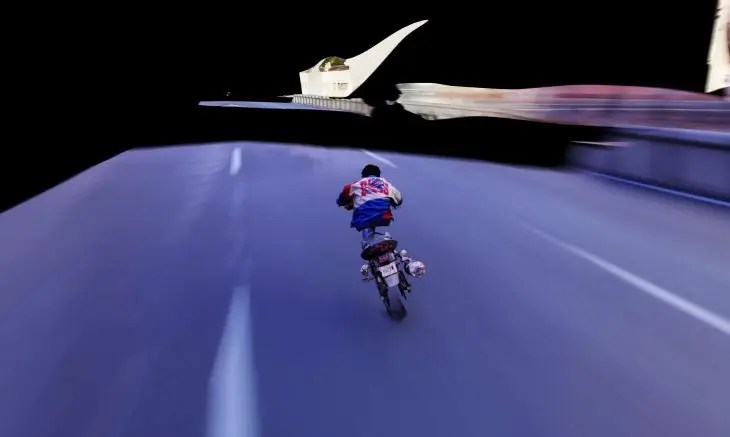
A man on his motorbike is driving through what looks like a dissolving video game, while a voiceover narrates in the first person “I had just finished another job for them” in typical gangster film style. As we’re taken through this inner journey images flicker to the rhythm of fading memories and elements of the decor emerge from the dark, offering us some of the most arresting visuals of this festival.
Domingo Familiar, by Gerardo del Razo
Another Mexican production, another opening shot on a motorbike, another account of everyday violence. I’m always here for a good sequence shot, and this one is well paced and cleverly staged. It all starts rather peacefully – an apartment block, men playing basketball. It will end the same way. In the meantime, things escalate pretty quickly.
Rhubarb Rhubarb, by Kate McMullen
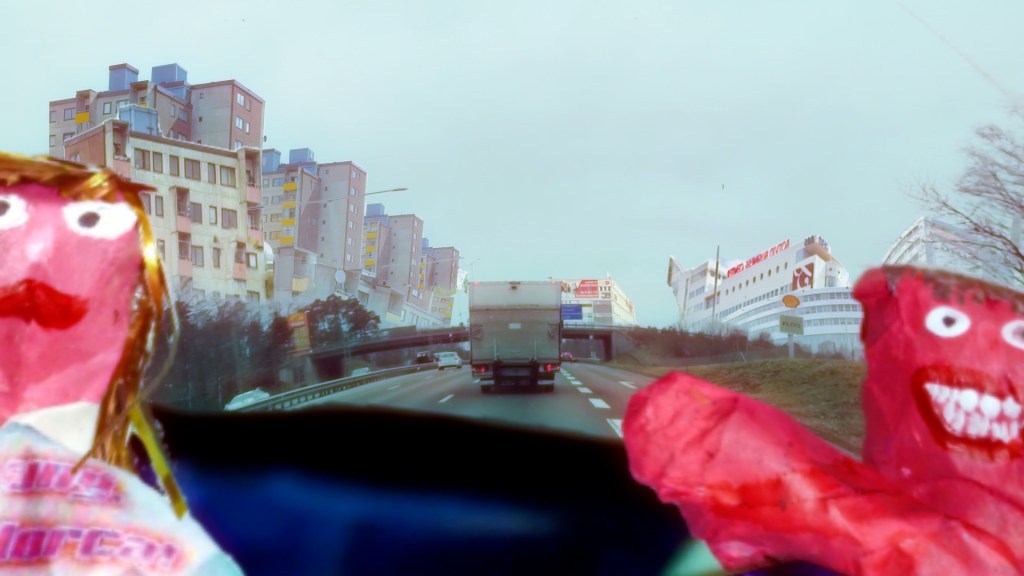
In the “rhubarb triangle” in Yorkshire, a woman struggles to run her farm, helped only by her “84 year-old assistant” (her Dad). The remarkable sound design and editing plunges us into the everyday life of this anachronistic place trapped between motorways. Trucks driving past, phone calls to the recruitment agency, boxes piling up. Everything feels relentless, except for the poetic shots of rhubarb slowly growing in a candlelit barn. A portrait of a dying world, with the tension of a thriller and the dialogue of a comedy.
L’enfant à la peau blanche (The Boy with White Skin),
by Simon Panay
“Gold is a beast. To hunt it, you need bait.” I love when a film uses dialogues sparingly and shows instead of explains. In this short fiction that opens with an enigmatic quote, a young boy is taken by his dad somewhere he doesn’t want to go. To find out where and why, we’ll have to follow him and experience his fear and discomfort first-hand. I have so many questions about how they managed to film these incredible underground scenes.
Généalogie de la violence (Genealogy of violence),
by Mohamed Bourouissa
Another highlight from the French competition, this first film from multi-talented visual artist Bourouissa depicts a sadly common situation and takes it to another level. A young man chats with his girlfriend in his car when two police officers decide to carry out a random ID check on him. As his mind wanders and dissociates from his body, the camera flies and swirls, reaching new heights. The use of experimental images contrasts with the realistic dialogues and situation, making the film both hypnotic and relatable.
Vox Humana, by Don Josephus Raphael Eblahan
A naked man found in the forest, a biologist who can speak a mysterious language, a contemplative sound recorder… In this haunting tale, the director lets his scenes breathe, offering us time to appreciate the gorgeous photography and the careful composition. It’s the kind of film that gives you enough to keep you completely engaged until the end, but leaves plenty of room for interpretation.
Apocalypse, by Benoît Méry
This playful documentary takes us to the Hellfest (a metal festival and one of the most popular music events in France) for an immersive journey through sound. It’s particularly entertaining when we spend time backstage (with a director orchestrating the TV broadcasting behind his giant console) or right in front of the stage (with the security staff who spend their entire festival turning their back to the scene).
Lamento, by Jannick Giger and Demian Wohler
A different melody… In one of the oddest films of the selection (that’s a compliment), famous love songs are chopped, twisted and remixed to create a dialogue between a man and a woman. The familiarity of the lyrics contrasts with the dissonant score: something’s off. It’s both uncomfortable and fun to watch – a friend of mine even told me he was moved to tears by it, which makes this film even more fascinating to me.
Servicio necrológico para usted (Obituary service for you), by Maria Salafranca
Many films from this year’s competition dealt with death or violence. To end this list on a lighter note, let’s go to Cuba to meet a charming couple working… in a funeral home. Facing the camera, they candidly explain their routine. For amateurs of deadpan humour (and true love).
Animation films are in the minority at Clermont, but the quality is high, and many titles deserve a mention here. Some are festival favourites already (the Annecy-winner Percebes by Alexandra Ramires and Laura Gonçalves, the Oscar-nominated Yuck! by Loïc Espuche or the more-relevant-than-ever Butterfly by Florence Miailhe). Others are newcomers: we’ll keep an eye on Natalia Léon, whose first film Como si la tierra se las hubiera tragado is a poignant reminder of what happens to hundreds of Mexican women who disappear every year in a deafening silence.
Cover image: Aferrado, Esteban Azuela
 UNDERDOG